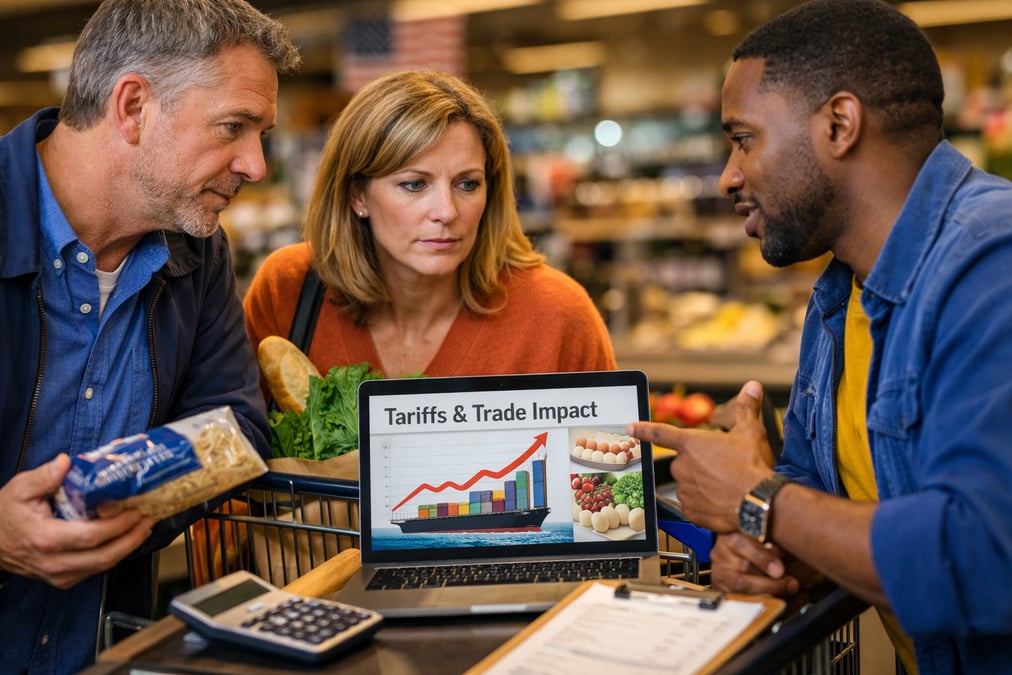
Tariffs and Import Prices: How 2026 Trade Policy Could Hit Your Grocery Bill
Tariffs and import costs ripple into food, cars and everyday essentials. How to track the signals and budget for 2026 price shocks.
 Marcus Thompson
Economic Analyst
Marcus Thompson is an economic analyst who covers the US macroeconomic landscape, from inflation and Federal Reserve policy to labor market trends. He translates complex economic data into actionable insights for everyday Americans.
Credentials: MA Economics, Columbia University
Tariffs and import costs ripple into food, cars and everyday essentials. How to track the signals and budget for 2026 price shocks.
Marcus Thompson 
As shipping and inventories normalize, many prices still won’t drop much—because wages, housing, and services costs now drive the inflation you feel most.
Marcus Thompson 
The recession signals that matter most in 2026—jobs, yields, credit and spending—and how to translate them into moves for cash flow, debt and savings.
Marcus Thompson 
Even with cooler CPI prints, many households feel squeezed because “real” wage gains are uneven across industries, regions, and debt loads.
Marcus Thompson 
A productivity lull is changing how companies hire, pay and invest—how to read the data and protect your income, savings and career in 2026.
Marcus Thompson 
How inflation, wage growth and interest rates interact—and how to protect your budget, savings and borrowing costs when paychecks don’t stretch.
Marcus Thompson 
Inflation has eased but many everyday costs stay sticky—what the data says, why, and how to plan your cash flow, savings and debt for 2026.
Marcus Thompson 
Inflation expectations shape how businesses set prices and how workers negotiate pay, a loop that keeps costs high even when headline inflation cools.
Marcus Thompson 
Shelter inflation is moving slower than the rest of the CPI, keeping budgets tight for renters and homeowners even as other prices ease.
Marcus Thompson